 |
 |

|
|
July / August 2002 -
Independence
Click on a link below to jump to an article:
Get to the source: alternative energy For most of human history, individuals have collected and produced their own energy. Imagine washing clothes, heating bathwater, and providing electricity for your entire house with just a little help from Mother Nature (and none from the electric company). Most of us find ourselves dependent on centralized electric distribution grids and fossil fuels supplied by multi-national corporations. Few people consider producing their own electricity, but more are opting to go off-grid every day. Going off-grid and being energy independent means producing, storing and using your own energy. Therefore, an independent electric power system has three main elements: an energy source, a holding place and a way to use it. Solar modules, wind turbines and water turbines produce energy; batteries store the energy; and the lights and appliances in your home consume the energy. Solar modules Solar electric (photovoltaic) modules convert sunlight directly into electricity. There are no moving parts, and the fuel supply is free. Solar modules produce direct current electricity, which can be stored in batteries. While costly to install, solar modules have several advantages: Little maintenance is required, sunlight is available to almost everyone, and they have a track record of high reliability.
Wind energy is less predictable than solar energy and more influenced by geographic location. Wind resources can be found in most areas of North America, but are best along coastlines, on hills, and in the northern states. Wind energy follows seasonal patterns, with the best performance in the winter months and the lowest performance in the summer months, which is the opposite of solar energy, making wind and solar electric systems good hybrid systems. The energy a wind turbine can produce depends on wind speed. Energy increases greatly with wind speed, so a small increase in wind speed leads to a much larger increase in energy. Small wind turbines can operate five years or more with minimal maintenance. The reliability and cost of operation of these units is equal to that of solar systems. Water turbines Water turbines, or small hydroelectric plants, extract energy from small creeks and streams. While most people don�t have access to suitable creeks and streams, those who do find that water is the least expensive of the independent renewable energy sources. The small hydroelectric systems used for independent power are very different from the large-scale plants the utilities build. These small hydro systems are run-of-river, meaning they do not store water behind a dam, eliminating most of the environmental impacts associated with dam construction and flooding. Run-of-river hydro is therefore susceptible to seasonal variations in water flow. Energy storage Batteries are the heart of any independent renewable energy system. Most people use deep cycle, lead acid batteries like the ones used in electric golf carts and forklifts. A good battery meter and a regular inspection and maintenance schedule are required to ensure long battery life. A properly maintained, good quality battery should last at least 10 years in a renewable energy system.
Energy conservation Unless you have unlimited funds, energy efficiency and conservation is paramount in an independent energy system. In most off-grid homes, water heating, cooking and space heating are usually accomplished with propane, natural gas or wood, and supplemented by a solar thermal system. Energy-efficient lights and appliances help offset the cost of additional solar modules and batteries. Another energy conserving measure is the elimination of �phantom loads.� Many appliances draw power even when they are off. Digital clocks on VCRs and microwaves are obvious examples, but televisions, satellite dishes and any appliance with a �wall cube� transformer (the small power box on the end of an electrical cord that plugs in the wall socket) also slowly drain away your precious energy store. Off-grid homes often have switches on the electrical outlets so that phantom loads can be easily turned off. Energy independence is not difficult. It just requires a shift in thinking from mere consumption to the production and management of a resource. Ultimately, we can become more aware of our impact on the environment and reduce the influence that large corporations have on our lives. NG
Warrior Women The gymnasium at the Chemawa Indian boarding school in Salem, Ore., is absolutely filled to capacity. Because this is a high school, the faces of teenagers are everywhere, but every age group is represented from the infant to the elder. They are all here for the school�s Annual Spring Powwow. The dancing arena is in the middle of the gymnasium. Large drums mark its perimeter, with drummers sitting in chairs around each drum. Only one drum is played at a time, and different drummers move from drum to drum in between dances. Singers hover above the drummers who simultaneously bang the skin of the drum. The men sing in a lower tone, while the women�s voices have a distinct, high pitch.
Presently, in the United States, many Native American women have raised their distinct voices to change policy and protect the status and welfare of their tribes, communities, families and land. Mothers, sisters, daughters, wives and grandmothers across the nation are tribal leaders. They are founders of organizations intended to restore tribal lands. They have testified before Congress and helped fund home-building campaigns on reservation lands. Many of these women are looking for creative community-based solutions to serious economic and social problems. Mothers, grandmothers and daughters
On April 7, 1998, Sue Crispen Schaffer, 16-year chair of Southern Oregon�s Cow Creek Band of Umpqua Indians, stood before the U.S. Senate Committee on Indian Affairs to defend the sovereignty of her tribe. Five feet tall and in her mid-70s, she told the committee that her tribe was not looking for handouts. "We intend to use our own resources to the greatest extent possible to provide our people with the opportunity to live and raise their children peacefully and fruitfully in their ancestral homeland," Schaffer said. "Restriction of tribal sovereignty would expose and reduce our resources in a manner destined to return us to the brink of extinction as a people."
The Cow Creek tribe, along with many other Native American nations in the United States, has a history of struggles with the U.S. government regarding sovereignty. In 1853, the Cow Creeks, seeking a peaceful solution to troubles with non-Indian settlers, became the first Oregon Treaty Tribe, which ceded their homeland to the U.S. government for a total of $12,000, or 2.3 cents per acre, paid over a 20-year period. The government then turned around and sold the lands to non-Indians for $1.25 per acre.
Schaffer came into leadership on the heels of tribal recognition, and she was instrumental in helping rebuild the Cow Creek nation. In 1984, the Cow Creek Umpqua Indians settled a lawsuit against the U.S. government over the value of lands taken from the tribe in 1853. The 1984 lawsuit paid the Cow Creeks $1.25 per acre sold in 1853, leaving the tribe with $1.3 million. Schaffer became tribal chair of the Cow Creeks in 1986 and worked to organize her tribe and improve their economic development and governance. In 1987, the Cow Creeks founded a tribal endowment plan and purchased an area of land called "Evergreen." They opened an Indian Bingo Hall in 1992 on that land, which grew into a full-service resort and gaming facility, the Seven Feathers Hotel and Casino Resort on the Cow Creek Umpqua Reservation. Presently, the Cow Creek Umpqua Indian Foundation provides annual grants to non-profit organizations in Southern Oregon counties. They have provided funding for groups like girls and boys clubs, domestic violence organizations, health care services, and legal councils. Breaking tradition
Schaffer is just one of the many women in this country fighting for tribal independence and self-sufficiency. Native American women are making enormous strides for their communities. Leadership positions traditionally held by men are now open to women.
Bridging the gap
The types of issues Mankiller focused on as a leader�health care, education and housing�are often viewed as women�s issues by our society. However, their impact goes beyond just women. These issues need to be addressed in order to rebuild communities that have suffered what Nancy Warneke calls �internalized oppression.� As the director of Tribal Business Information Center at the Salish Kootenai College in Montana as well as acting director of the Ktunaxa Community Development Corporation, Warneke is attempting to heal the deep wounds of this oppression. She describes this phenomenon in her paper Empowerment is a very important concept for these women and their communities. �For too long government programs have been directed at the people rather than coming from the grass roots,� says Warneke. Because many Native Americans distrust the federal government and its programs, a belief of many Native American leaders is that the only people who are going to help Native Americans are their own people. A voice for the self-determined Winona LaDuke, one of the most prominent Native American women in the world today, puts the problem in perspective nicely. In an interview with Multinational Monitor in 1999, she said that material wealth was not the issue, but rather, having basic human needs met and living with dignity within the reservation. She detailed the current conditions of her reservation: one dentist for every 6,000 people, half the population living at or below the poverty level, overcrowded or substandard housing, and arrest rates seven times that of non-Indians. �We have every social problem associated with chronic poverty,� LaDuke told the Monitor. �We would like to live and we intend to live with some dignity. But you have to address that structural poverty. You can throw whatever social program you want at this, but until we are allowed to determine our own destiny, these are the problems we are going to face.� Another Ms. magazine Woman of the Year (1997), LaDuke lives on the White Earth reservation in Minnesota and is a member of the Mississippi Band of Anishinaabeg. After graduating from Harvard, LaDuke moved to her ancestral land of White Earth, where she was involved in a lawsuit to recover her tribe�s land. Running into roadblocks in the U.S. legal system that are all too prevalent when it comes to Indian lands, she founded the White Earth Land Recovery Project in order to raise funds to purchase back the land that was taken from the White Earth people by the U.S. government. In the 1996 and 2000 presidential campaigns, LaDuke served as Ralph Nader�s running mate for the Green Party. A feminist, activist, environmentalist and writer, LaDuke�s concerns reach beyond Native Americans and delve into the lives of indigenous peoples around the world. As the co-chair for the Indigenous Women�s Network, she is a part of a coalition of more than 400 indigenous women activists working to support the self-determination of indigenous women, families, communities and nations in the Americas and the Pacific Basin. At the United Nations Fourth World Conference on Women in Beijing, China, in 1995, she stated, �A primary and central challenge impacting women as we approach the 21st century will be the distance we collectively as women�and societies�have artificially placed ourselves from our Mother the Earth, and the inherent environmental, social, health and psychological consequences of colonialism, and subsequently rapid industrialization on our bodies and our nations.� LaDuke went on to say that an increasing lack of control over our long-term security and ourselves must be rectified through international laws, as well as policies and practices of our nations, our communities, our states and ourselves. Small strides,big changes Nation by nation, tribe by tribe, family by family, woman by woman, and man by man, the collective American Indian community is taking steps to regain control over its land and its people. Women are helping their communities find innovative ways to overcome structural poverty and institutionalized racism, and they are helping to build strong Indian nations. The change is even reflected in the U.S. Bureau of Indian Affairs (BIA), an organization that has often overlooked the needs of Native Americans in the face of commerce and greed. Over the past decades, Native Americans have gained prominent positions in the BIA, and in May of this year, Jeanette Hanna, a member of the Seminole Nation of Oklahoma, was appointed to be the new director of the Bureau�s Eastern Oklahoma Regional Office. Small strides like these can help Native Americas realize their destiny. NG
back to top The Unquiet Voice By A.J. Barnum The news media have painted a pretty bleak picture of the life of contemporary Afghan women. Under Taliban rule, they were forced to wear a constrictive burqa, denied access to education and other basic liberties, and threatened with being shot if unwilling to comply with rigid rules of behavior. Having little knowledge of Afghanistan�s history, many of us may have assumed it was always like this. But it wasn�t. From the 1960s until 1996, women such as Shafiqa Habibi, a prominent news reporter and broadcast journalist in Afghanistan, held powerful roles in Afghanistan�s media and political arenas. Habibi is one of many women now demanding a role for women in Afghanistan�s new government and fighting for lasting change in their country. Habibi graduated from Kabul University in the 1960s in an Afghanistan where women were earning positions of power in Parliament. She began working immediately as a news reporter for Radio Afghanistan, which later paired with TV Afghanistan, making Habibi and her fellow journalists responsible for disseminating incredible amounts of information throughout the country. During her college years and later as a reporter, she saw additional gains for women: The veil was made voluntary in 1959, and women gained the constitutional right to vote in 1964.
Habibi specifically encouraged women in her own field of broadcast journalism, founding the Women�s Radio and Television Broadcast Organization in 1994. At the organization�s peak, just before the Taliban came into power, it boasted 190 members, 100 of whom were journalists, and the rest engineers and administrators. In 1996, Taliban leaders disbanded Habibi�s professional organization, and she and her colleagues were forced to quit their jobs. The broadcast media Habibi once used to make her voice heard was exploited to tell women to cover themselves with full-length burqas and return home. �There was no possibility to work in Kabul during the Taliban,� Habibi says. �All the women were afraid.� The Taliban took control of Radio Afghanistan, renaming it Shari�ah (meaning �Islamic law�) and using it to broadcast their fundamentalist viewpoints. Television programs of any kind, including the many news programs Habibi once worked for, were banned throughout the country. But even as the Taliban silenced women across the country, Habibi would not relent in helping women gain an education. In defiance of Taliban law forbidding women to work or attend school, she started the Afghan Feminine Association, an underground organization where women could learn a craft and sell items they made. �We had no permission to educate girls, so we trained them in handicraft skills to keep them busy, to benefit them, and to give them morale,� Habibi says.
The Feminine Association has received monetary and other forms of assistance from international women�s organizations. These include the Global Fund for Women and Refugee Women in Development.
Now, with the Taliban driven out of Afghanistan, Habibi can again work openly to help women regain their previous independence and power. The Feminine Association maintains an office in Peshawar, Pakistan, where Habibi fled with many other Afghans at the start of the U.S. bombing campaign in October 2001. In addition, the Feminine Association and the Afghan Women�s Journalist Association have recently joined forces to become the New Afghanistan Women�s Association (NAWA). Habibi says the new organization will fight �to protect women�s rights, democracy, education for girls, and information about civil life.�
In December 2001, Habibi traveled to Brussels along with nearly 40 other Afghan women for the Afghan Women�s Summit for Democracy, to ensure women�s place in whatever lasting government comes into power in their war-torn country. The women�s summit further resulted in the Brussels Proclamation, a document outlining priorities for Afghan women, including education, health and human rights, and the establishment of an Afghan Ministry of Women�s Affairs. As a result of her efforts, Habibi was recently named the first recipient of the Ida B. Wells Bravery in Journalism Award, presented by Women�s Enews at their �21 Leaders for the 21st Century� gala.
Habibi says she is hopeful that the violence toward women during the Taliban regime will end forever now that the world has turned its eyes on her country and international peacekeepers have arrived. �I am hopeful that the violations against women during the Taliban are not repeated, with the help of UN security peace soldiers in Afghanistan,� she says. �I am sure it is the only way to deliver the Afghanistan people.� NG
|
|
|
Nervy Girl! - P.O.Box 16601
- Portland, OR 97292 - 503-25-NERVY -
ISSN 1536-9897 Copyright 2002 by Nervy Girl!, LLC. All rights reserved. Reproduction without permission is prohibited.
|

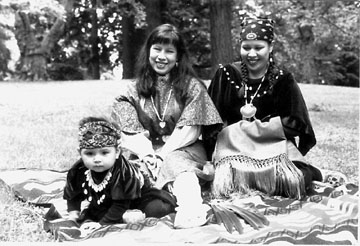
 The master of ceremonies announces the next group of dancers, the women�s traditional group. They have the grandest of the regalia worn by the women here tonight. Adorned in buckskin and intricate beadwork, the women form a circle and begin dancing. As the drum beats, the people sing and the women dance. The announcer tells the audience, �These are our mothers and mothers-to-be�these women are the glue that hold our families together.�
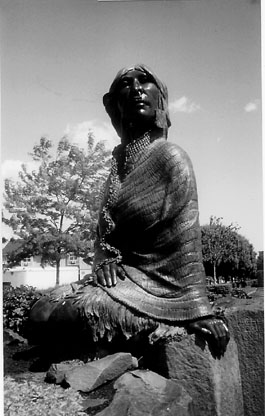
 Commonly, throughout many Native American nations, women have had a great amount of power but were unable to hold many leadership positions. Generally, society viewed women as creators of life and men as the takers of life. Therefore, the women ruled over all things created, from their children to their crops, and many clans were traced matrilineally. Women served key roles in selecting male leaders and served as clan leaders themselves. However, they were not allowed to be chiefs.
The first American Indian female tribal chief was Wilma Mankiller. Active in the Native American rights movement in the 1960s, Mankiller began her formal career of tribal leadership in 1977 when she became the community development director of the Cherokee Nation. She was focused on improving the well-being of her tribe, but initially she had to deal with other concerns from her people.
Commonly, throughout many Native American nations, women have had a great amount of power but were unable to hold many leadership positions. Generally, society viewed women as creators of life and men as the takers of life. Therefore, the women ruled over all things created, from their children to their crops, and many clans were traced matrilineally. Women served key roles in selecting male leaders and served as clan leaders themselves. However, they were not allowed to be chiefs.
The first American Indian female tribal chief was Wilma Mankiller. Active in the Native American rights movement in the 1960s, Mankiller began her formal career of tribal leadership in 1977 when she became the community development director of the Cherokee Nation. She was focused on improving the well-being of her tribe, but initially she had to deal with other concerns from her people.
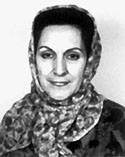 Habibi also saw her country torn apart by civil wars and the Soviet invasion that, at times, threatened her profession and her life. Throughout these years, Habibi continued to report the news to the Afghan people. She won four prizes and two medals for her work.